
SAC-SINGLAS Accredited · ISO/IEC 17025
Timer / Stopwatch Calibration
Unitest calibrates digital and mechanical timers and stopwatches in Singapore against a traceable time/frequency reference, with ISO/IEC 17025 certificates.
What is Timer / Stopwatch Calibration?
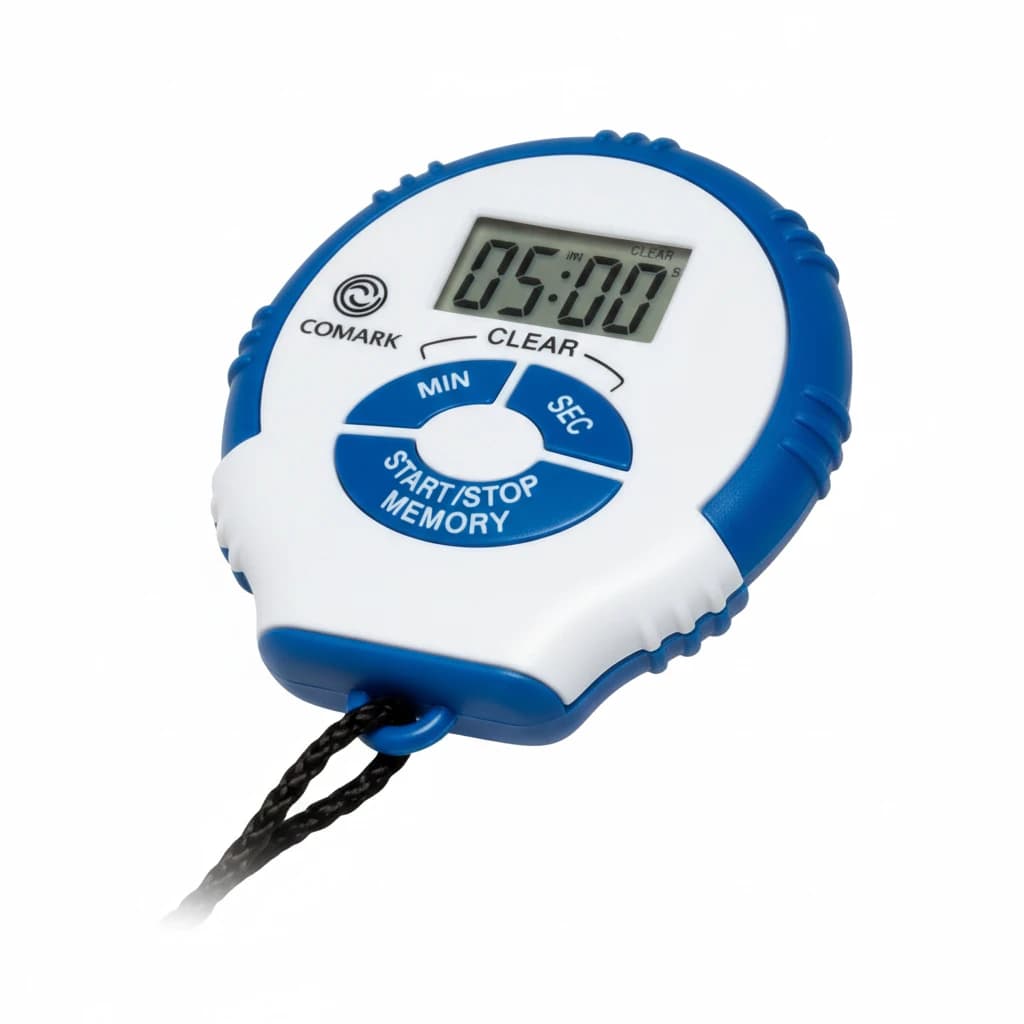
A timer or stopwatch is a critical instrument used in laboratories, manufacturing, sports timing, and process monitoring to precisely measure elapsed time. Calibration is the systematic process of verifying and adjusting its time-measurement accuracy against known reference standards. Over time, timing drift can occur due to ageing mechanisms, environmental influences, battery fluctuations or mechanical wear-and-tear, which can lead to inconsistent or inaccurate readings. Calibration ensures your timer or stopwatch remains reliable, offering trustworthy time-measurement for your critical applications.
When Should You Calibrate Your Timer / Stopwatch?
The calibration frequency depends on factors such as how intensively it is used, the precision required, and any changes in its operating conditions. As a general guideline:
New Equipment: Newly-acquired timers or stopwatches should undergo an initial calibration to establish a baseline of accuracy.
Regular Calibration: Periodic calibration is recommended-typically annually or more frequently if the device is used in high-precision contexts or subjected to harsh environments.
After Repairs or Modifications: If the device has been serviced, repaired, or modified, a recalibration is essential to ensure its continued performance accuracy.
Change in Operating Environment: Calibration may be necessary if the device is relocated, exposed to different temperature/humidity conditions or used under significantly different workload or stress.
Conclusion
In conclusion, timer and stopwatch calibration is a foundational practice to maintain accurate time-measurements, ensuring reliability and compliance with quality standards. By performing regular calibrations, you can trust your elapsed-time readings, avoid timing errors, and make confident decisions based on dependable data.
What we calibrate
Timer & Stopwatch instruments we calibrate
- Digital stopwatches
- Mechanical stopwatches
- Lab & process timers
- Countdown timers
Accredited under SAC-SINGLAS LA-2023-0845-C. View our accreditation & scope →
Instrument guides: Stopwatch / Precision Timer
Questions
Timer & Stopwatch calibration FAQ
How is a stopwatch calibrated?
A stopwatch is calibrated by comparing its elapsed-time readings against a traceable time/frequency reference. Typically a GPS-disciplined oscillator or a frequency standard traceable to national time standards. The stopwatch is activated and stopped at set intervals, and the deviation between displayed time and the reference time is measured at multiple points across its range. The calibration certificate records the as-found error and expanded measurement uncertainty at each test point.
How often should a stopwatch be calibrated?
For most laboratory and industrial applications, annual calibration is sufficient. Stopwatches used in critical processes (pharmaceutical timing, sports timing for competition, or process control), may require calibration every 6 months. Calibration should also be performed after any significant impact, battery replacement on older mechanical models, or if the display shows inconsistent behaviour. Your quality management system (ISO 9001, GLP/GMP) will specify the required interval.
Can all types of stopwatches be calibrated?
Yes. Unitest calibrates both digital and mechanical (analogue) stopwatches and timers. Digital stopwatches are calibrated electronically against a traceable frequency reference. Mechanical stopwatches are calibrated by timing them against the same reference over multiple start-stop cycles to average out human reaction time. Countdown timers, lap timers, and laboratory process timers can also be calibrated.
What is the typical accuracy of a calibrated stopwatch?
Most modern digital stopwatches have a typical drift of ±0.01% to ±0.1% of the elapsed time when calibrated. For a 60-second measurement, that is roughly ±6 ms to ±60 ms. Mechanical stopwatches are generally less accurate, typically ±0.1% to ±0.5%. The calibration certificate from Unitest will state the measured error and expanded measurement uncertainty (to 2σ, 95% confidence) for your specific instrument.
Accredited ranges
Timer & Stopwatch calibration ranges & measurement uncertainty
The parameters, ranges and calibration & measurement capability (CMC) below are taken from our SAC-SINGLAS Schedule of Accreditation (LA-2023-0845-C, to ISO/IEC 17025). CMC is the smallest measurement uncertainty we can achieve under accredited conditions.
Calibration of Stop Watch Timer· UNI-E006 Rev:0
| Range / measured quantity | Measurement uncertainty (CMC) |
|---|---|
| 1 s – 60 s | 0.25 s |
| 61 s – 600 s | 0.13 s |
| 601 s – 1200 s | 0.13 s |
| 1201 s – 1800 s | 0.13 s |
| 1801 s – 3600 s | 0.13 s |
| 3601 s – 7200 s | 0.13 s |
| 7201 – 10800 s | 0.13 s |
Related
Other calibration disciplines
Tachometer Calibration
Learn more →Oscilloscope Calibration
Learn more →Guides & resources