
Traceable Calibration Service
Thermistor Calibration
Unitest calibrates thermistor probes (including NTC and PTC types) in Singapore as a traceable calibration, by comparison against accredited reference thermometers, and issues an ISO/IEC 17025 traceable certificate.
What is thermistor calibration?
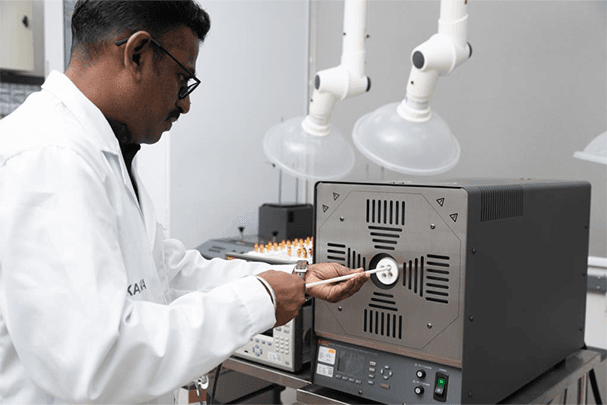
Thermistor calibration is the documented comparison of a thermistor probe against a reference thermometer of known, traceable accuracy. The thermistor and the reference are held together in a stable, uniform medium (typically a stirred liquid bath or dry-block) at each temperature set point, and the thermistor's indicated temperature is compared with the true reference temperature. The deviation is recorded across the working range, and a certificate is issued stating the result and its measurement uncertainty.
Traceable, not separately accredited: the honest position
Unitest's SAC-SINGLAS accredited temperature scope (method UNI-T001) names RTD, PRT and thermocouple sensors. It does not separately list thermistors. So we do not call thermistor calibration SAC-SINGLAS accredited, because that would overstate our scope.
What we can honestly offer is a traceable calibration: your thermistor is compared against reference thermometers whose calibration is accredited and traceable to national standards under LA-2023-0845-C. This gives you a defensible, traceable certificate that suits most internal quality, process and monitoring uses. If your application requires an accredited thermistor certificate specifically, tell us the sensor and the range and we will confirm what we can and cannot cover before you commit.
Why thermistors drift and when to calibrate
Thermistors drift through ageing of the semiconductor element, thermal and mechanical stress, moisture ingress and self-heating. Because they are often used precisely because a fraction of a degree matters (incubators, medical devices, cold-chain monitoring, laboratory baths), even small drift undermines the reason the sensor was chosen.
Calibrate a new thermistor before it goes into service, then periodically (typically every 12 months, or more often for critical use), and after any shock, repair or exposure to out-of-range conditions. Standard turnaround is 5 to 7 working days, with a 2 to 3 day express option, and free collection and delivery across Singapore for orders of S$300 and above.
What we calibrate
Thermistor instruments we calibrate
- NTC thermistor probes
- PTC thermistor probes
- Thermistor thermometers & readouts
- Thermistor-based data loggers
- Laboratory & incubator thermistor sensors
Provided as a traceable (non-accredited) calibration service, not part of our SAC-SINGLAS accredited scope. Certificates are traceable to national standards through our reference standards. About our accreditation & scope →
Questions
Thermistor calibration FAQ
Is thermistor calibration SAC-SINGLAS accredited?
No, not as a separately accredited line. Our SAC-SINGLAS accredited temperature schedule names RTD, PRT and thermocouple sensors, not thermistors. We calibrate thermistors as a traceable calibration by comparison against accredited reference thermometers, and we issue an ISO/IEC 17025 traceable certificate. This suits most internal quality and monitoring uses. Contact us to confirm the scope for your specific sensor and range before you decide.
What is the difference between a thermistor and an RTD?
Both measure temperature from a change in electrical resistance, but a thermistor uses a semiconductor element with a large, non-linear resistance change, while an RTD (such as a PT100) uses a metal element, usually platinum, with a smaller, more linear change. Thermistors are very sensitive over a narrow band; RTDs are more stable over a wide range. Unitest's RTD and PRT calibration is on our accredited SINGLAS schedule, whereas thermistor calibration is offered as a traceable service.
How is a thermistor calibrated?
By comparison. The thermistor and a reference thermometer are placed together in a stable, uniform bath or dry-block, held at each set point, and their readings compared. The deviation between the thermistor's indicated temperature and the true reference temperature is recorded across the range, and the certificate states the error and expanded measurement uncertainty at each point.
How often should a thermistor be calibrated?
For most applications, once every 12 months. Thermistors used in critical roles such as medical devices, incubators or cold-chain monitoring may be calibrated every 6 months, and any thermistor should be recalibrated after a shock, a repair, or exposure to out-of-range conditions. Your quality management system will usually specify the required interval.
Range information
Range & scope
We provide thermistor calibration with full measurement traceability to national and international standards. For the certificate type and calibration options best suited to your instruments and audit requirements, talk to our team and we'll recommend the right approach for your needs.
View our SINGLAS Schedule (LA-2023-0845-C), PDFRelated
Other calibration disciplines
Temperature Calibration
Learn more →RTD Probe Calibration
Learn more →PRT Probe Calibration
Learn more →Liquid Bath Calibration
Learn more →Guides & resources
Thermistor calibration guides
Will Your Temperature Cert Survive the Audit? How Often to Calibrate Temperature Sensors
The auditor's checklist for a temperature calibration certificate, accreditation logo, traceability chain, stated uncertainty, in-scope range and interval, plus how to set defensible calibration frequencies for RTDs, PRTs, thermocouples, thermistors and infrared thermometers in Singapore.
Read guide →Thermistor Calibration Explained: NTC vs PTC and Why Traceability Matters
How thermistors are calibrated in Singapore, the difference between NTC and PTC types, and why a traceable calibration by comparison, honestly not accredited, still stands up in an audit for medical, pharmaceutical and cold-chain monitoring.
Read guide →Temperature Sensor Types: RTD vs PRT vs Thermocouple vs Thermistor vs Infrared
A Singapore engineer's guide to temperature sensor types: how RTDs, PRTs, thermocouples, thermistors and infrared thermometers differ in accuracy, range and drift, and how each is calibrated to a traceable, audit-ready standard.
Read guide →