
SAC-SINGLAS Accredited · ISO/IEC 17025
Electrical Calibration
Unitest provides SAC-SINGLAS accredited electrical calibration in Singapore for digital multimeters, clamp meters, insulation testers, calibrators, power meters and process instruments, with traceable ISO/IEC 17025 certificates, in our lab or on-site.
What is electrical calibration?
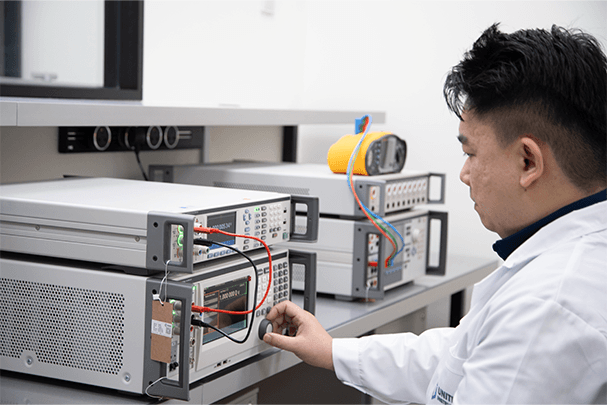
Electrical calibration is the documented comparison of an electrical measuring instrument against a reference standard of known, traceable accuracy. Across quantities such as DC and AC voltage, DC and AC current, resistance, frequency and capacitance. The instrument's readings are checked at defined points across its range, the deviation (error) is recorded against the reference, and a calibration certificate is issued stating the result and its measurement uncertainty.
For that certificate to actually mean something, the reference standards must be traceable through an unbroken chain to national and international standards, each link with a stated uncertainty. That traceability (and the demonstrated technical competence behind it), is exactly what a SAC-SINGLAS accredited ISO/IEC 17025 calibration provides, and what a generic, non-accredited "calibration sticker" often does not.
Why electrical calibration matters
Every electrical instrument drifts over time. Through component ageing, mechanical shock, overload and exposure to heat, humidity and dust. A multimeter or insulation tester reading even 1–2% out can quietly pass a failing motor winding as "safe," mis-trip protection, or send a non-conforming product out the door. In electrical work that drift isn't just a quality problem; it's a safety one, tied directly to shock and arc-flash risk.
Accurate, traceable electrical measurement underpins three things at once: safety for the people relying on the readings, product and process quality, and compliance with ISO 9001, ISO/IEC 17025 and regulated-industry requirements. Accredited calibration is how you prove (to your auditor, your customer and yourself), that the number on the screen can be trusted.
How often should electrical instruments be calibrated?
As a general rule, electrical test and measurement instruments should be calibrated at least once every 12 months. The right interval, however, depends on how the instrument is actually used.
Key factors include the manufacturer's recommendation, how critical the measurement is, how frequently and how harshly the instrument is used, its drift history from previous calibrations, and any customer or audit requirements. Safety-critical or heavily-used instruments may warrant a 6-monthly interval, while lightly-used reference instruments may safely run longer. We can recommend an interval based on your usage, and send you a recall reminder when each instrument is due.
Signs your electrical instrument needs recalibration
Send an instrument in for calibration if it is overdue or has no current certificate; if its readings disagree with a known-good reference or a second meter; if it has been dropped, overloaded or exposed to extreme conditions; if it is used for any safety or compliance decision; or whenever a customer or auditor asks for accredited calibration evidence.
What we calibrate
Electrical instruments we calibrate
- Digital multimeters (DMMs)
- Clamp meters
- Insulation & earth testers
- Multifunction & loop calibrators
- Power / energy meters
- Process calibrators
- Decade boxes
Accredited under SAC-SINGLAS LA-2023-0845-C. View our accreditation & scope →
Instrument guides: Digital Multimeter · Analog Multimeter · Clamp Meter · Insulation Resistance Tester · Portable Appliance Tester · Earth / Ground Resistance Tester · Ground Bond Continuity Tester · Leakage Current Meter · LCR Bridge / Meter · Power Quality Analyzer · Energy Logger / Power Meter · Loop / Process Signal Calibrator · Multifunction Calibrator · Electrical Installation Tester · Battery Impedance / Capacity Tester · Bench Multimeter · Capacitance Meter · Inductance Meter
Questions
Electrical calibration FAQ
Why is Electrical Calibration Important?
Electrical calibration is important because the accuracy of current measurements is critical in many electrical applications. If a electrical is not calibrated correctly, it may provide inaccurate readings, which can lead to incorrect diagnoses and repairs, or even create hazardous conditions. Regular calibration of electricals ensures that they are measuring accurately and providing reliable results.
How often do you need electrical and electronic calibration services in Singapore?
The frequency of electrical calibration depends on several factors, including the industry, application, and frequency of use. Typically, electricals should be calibrated at least once a year, but some applications may require more frequent calibration. It is important to consult with a reliable calibration service provider to determine the appropriate calibration frequency based on the specific application and industry requirements. Unitest Instruments delivers electric calibration services in Singapore.
What is Involved in Electrical Calibration?
electrical calibration involves a series of tests to verify the accuracy of the instrument. The electrical is compared against a known reference source to ensure that it is measuring correctly. The calibration process includes tests at several current levels, and the results are compared with the reference values. If necessary, adjustments are made to the electrical to bring it back to its original calibration. Calibration certificates are then provided to document the calibration process and results, providing traceability and peace of mind for the customers.
Accredited ranges
Electrical calibration ranges & measurement uncertainty
The parameters, ranges and calibration & measurement capability (CMC) below are taken from our SAC-SINGLAS Schedule of Accreditation (LA-2023-0845-C, to ISO/IEC 17025). CMC is the smallest measurement uncertainty we can achieve under accredited conditions.
Resistance measuring instrument· UNI-E001 Rev:0
| Range / measured quantity | Measurement uncertainty (CMC) |
|---|---|
| 0 Ω – 12 Ω | 0.011 Ω |
| >12 Ω – 120 Ω | 0.13 % |
| >120 Ω – 1.2 kΩ | 0.11 % |
| >1.2 kΩ – 12 kΩ | 0.019 % |
| >12 kΩ – 120 kΩ | 0.011 % |
| >120 kΩ – 1.2 MΩ | 0.011 % |
| >1.2 MΩ – 12 MΩ | 0.021 % |
| >12 MΩ – 120 MΩ | 0.062 % |
| >120 MΩ – 1200 MΩ | 0.42 % |
DC Voltage measuring instrument· UNI-E001 Rev:0
| Range / measured quantity | Measurement uncertainty (CMC) |
|---|---|
| 0 mV – 120 mV | 0.0024 mV |
| >120 mV – 1.2 V | 0.0011 % |
| >1.2 V – 12 V | 0.0017 % |
| >12 V – 120 V | 0.0024 % |
| >120 V – 1020 V | 0.0024 % |
AC Voltage measuring instruments· UNI-E001 Rev:0
| Range / measured quantity | Measurement uncertainty (CMC) |
|---|---|
| 1.0 mV to 12 mV, 3 Hz to 5 Hz | 1.6% |
| 1.0 mV to 12 mV, >5 Hz to 10 kHz | 1.0 % |
| 1.0 mV to 12 mV, >10 kHz to 20 kHz | 0.65 % |
| 1.0 mV to 12 mV, >20 kHz to 50 kHz | 0.66 % |
| 1.0 mV to 12 mV, >50 kHz to 100 kHz | 1.7 % |
| 1.0 mV to 12 mV, >100 kHz to 500 kHz | 3.9 % |
| 12 mV to 120 mV, 3 Hz – 5 Hz | 0.32 % |
| 12 mV to 120 mV, >5 Hz – 10 kHz | 0.17 % |
| 12 mV to 120 mV, >10 kHz – 20 kHz | 0.065 % |
| 12 mV to 120 mV, >20 kHz – 50 kHz | 0.11 % |
| 12 mV to 120 mV, >50 kHz – 100 kHz | 0.25 % |
| 12 mV to 120 mV, >100 kHz – 500 kHz | 1.3 % |
| 120 mV – 1.2 V, 3 Hz – 5 Hz | 0.42 % |
| 120 mV – 1.2 V, >5 Hz – 10 Hz | 0.15 % |
| 120 mV – 1.2 V, >10 Hz – 40 Hz | 0.6 % |
| 120 mV – 1.2 V, >40 Hz – 20 kHz | 0.13 % |
| 120 mV – 1.2 V, >20 kHz – 50 kHz | 0.047 % |
| 120 mV – 1.2 V, >50 kHz – 100 kHz | 0.11 % |
| 120 mV – 1.2 V, >100 kHz – 500 kHz | 0.41 % |
| 1.2 V – 12 V, 3 Hz – 5 Hz | 0.33 % |
| 1.2 V – 12 V, >5 Hz – 10 Hz | 0.5 % |
| 1.2 V – 12 V, >10 Hz – 40 Hz | 0.6 % |
| 1.2 V – 12 V, >40 Hz – 20 kHz | 0.018 % |
| 1.2 V – 12 V, >20 kHz – 50 kHz | 0.035 % |
| 1.2 V – 12 V, >50 kHz – 100 kHz | 0.081 % |
| 1.2 V – 12 V, > 100 kHz – 500 kHz | 0.25 |
| 12 V – 120 V, >3 Hz – 5 Hz | 0.32 % |
| 12 V – 120 V, >5 Hz – 10 Hz | 0.50 % |
| 12 V – 120 V, >10 Hz – 40 Hz | 0.045 % |
| 12 V – 120 V, >40 Hz – 20 kHz | 0.092 % |
| 12 V – 120 V, >20 kHz – 50 kHz | 0.036 % |
| 12 V – 120 V, >50 kHz – 100 kHz | 0.082 % |
| 120 V – 330 V, 3 Hz – 5 Hz | 0.50 % |
| 120 V – 330 V, >5 Hz – 10 Hz | 0.16 % |
| 120 V – 330 V, >10.1 Hz – 20 kHz | 0.021 % |
| 120 V – 330 V, >20 kHz – 50 kHz | 0.039 % |
| 120 V – 330 V, >50 kHz – 100 kHz | 0.17 % |
| 330V – 1020 V, 3 Hz – 5 Hz | 0.29 % |
| 330V – 1020 V, >5 Hz – 10 Hz | 0.12 % |
| 330V – 1020 V, >10 Hz – 10 kHz | 0.04 % |
DC Current measuring instruments· UNI-E001 Rev:0
| Range / measured quantity | Measurement uncertainty (CMC) |
|---|---|
| 0 µA – 120 µA | 0.021 µA |
| >120 µA – 1.2 mA | 0.045 % |
| >1.2 mA – 12 mA | 0.019 % |
| >12 mA – 120 mA | 0.02 % |
| >120 mA – 1.2 A | 0.029 % |
| >1.2 A – 3.1 A | 0.044 % |
| >3.1 A – 12 A | 0.041 % |
| >12 A – 30 A | 0.11 % |
DC Current Clamp measuring instruments· UNI-E002 Rev:0
| Range / measured quantity | Measurement uncertainty (CMC) |
|---|---|
| 0 mA – 20 mA | 0.14 mA |
| 20 mA – 100 mA | 0.72 % |
| 0.1 A – 4 A | 1.0 % |
| >4 A – 40 A | 0.7 % |
| >40 A – 60 A | 0.67 % |
| >60 A – 200 A | 0.67 % |
| >200 A – 300 A | 0.67 % |
| >300 A – 1500A | 0.67 % |
AC Current measuring instruments· UNI-E001 Rev:0
| Range / measured quantity | Measurement uncertainty (CMC) |
|---|---|
| 10 µA – 120 µA, >3 Hz – 22.5 Hz | 0.14 % |
| 10 µA – 120 µA, >22.5 Hz – 45 Hz | 0.06 % |
| 10 µA – 120 µA, >45 Hz – 1 kHz | 0.06 % |
| 10 µA – 120 µA, >1 kHz – 5 kHz | 0.06 % |
| 10 µA – 120 µA, >5 kHz – 10 kHz | 0.14 % |
| 10 µA – 120 µA, >10 kHz – 30 kHz | 3.4 % |
| 120 µA – 1.2 mA, 3 Hz – 22.5 Hz | 0.14 % |
| 120 µA – 1.2 mA, >22.5 Hz – 45 Hz | 0.11 % |
| 120 µA – 1.2 mA, >45 Hz – 1 kHz | 0.12 % |
| 120 µA – 1.2 mA, >1 kHz – 5 kHz | 0.11 % |
| 120 µA – 1.2 mA, >5 kHz – 10 kHz | 0.24 % |
| 120 µA – 1.2 mA, >10 kHz – 30 kHz | 4.8 % |
| 1.2 mA – 12 mA, 3 Hz – 45 Hz | 0.11 % |
| 1.2 mA – 12 mA, >45 Hz – 1 kHz | 0.11 % |
| 1.2 mA – 12 mA, >1 kHz – 5 kHz | 0.11 % |
| 1.2 mA – 12 mA, >5 kHz – 10 kHz | 0.24 % |
| 1.2 mA – 12 mA, >10 kHz – 30 kHz | 1.4 % |
| 12 mA – 120 mA, 3 Hz – 45 Hz | 0.11 % |
| 12 mA – 120 mA, >45 Hz – 1 kHz | 0.06 % |
| 12 mA – 120 mA, >1 kHz – 5 kHz | 0.018 % |
| 12 mA – 120 mA, >5 kHz – 10 kHz | 0.24 % |
| 12 mA – 120 mA, >10 kHz – 30 kHz | 1.4 % |
| 120 mA – 1.2 A, 3 Hz – 45 Hz | 0.34 % |
| 120 mA – 1.2 A, >45 Hz – 1 kHz | 0.068 % |
| 120 mA – 1.2 A, >1 kHz – 5 kHz | 0.09 % |
| 120 mA – 1.2 A, >5 kHz – 10 kHz | 0.5 % |
| 120 mA – 1.2 A, >10 kHz – 30 kHz | 0.8 % |
| 1.2 A – 3.1 A, 3 Hz – 45 Hz | 0.25 % |
| 1.2 A – 3.1 A, >45 Hz – 1 kHz | 0.06 % |
| 1.2 A – 3.1 A, >1 kHz – 5 kHz | 0.06 % |
| 1.2 A – 3.1 A, >5 kHz – 10 kHz | 0.3 % |
| 3.1 A – 12 A, 3 Hz – 45 Hz | 0.12 % |
| 3.1 A – 12 A, >45 Hz – 1 kHz | 0.05 % |
| 3.1 A – 12 A, >1 kHz – 5 kHz | 0.07 % |
| 3.1 A – 12 A, >5 kHz – 10 kHz | 0.29 % |
| 12 A – 30.2 A, 3 Hz – 45 Hz | 0.21 % |
| 12 A – 30.2 A, >45 Hz – 1 kHz | 0.14 % |
| 12 A – 30.2 A, >1 kHz – 5 kHz | 0.57 % |
AC Current clamp measuring instrument (30 Hz – 60 Hz)· UNI-E002 Rev:0
| Range / measured quantity | Measurement uncertainty (CMC) |
|---|---|
| 10 mA – 40 mA | 0.76 % |
| 40 mA – 400 mA | 0.70 % |
| 0.4 A – 4 A | 0.67 % |
| >4 A – 40 A | 0.68 % |
| >40 A – 60 A | 0.72 % |
| >60 A – 200 A | 0.69 % |
| >200 A – 300 A | 0.68 % |
| >300 A – 1500A | 0.67 % |
Frequency measuring instruments· UNI-E001 Rev:0
| Range / measured quantity | Measurement uncertainty (CMC) |
|---|---|
| 0.01 Hz – 119.99 Hz | 0.018 % |
| 120.0 Hz – 1199.9 Hz | 0.0014 % |
| 1.200 kHz – 11.999 kHz | 0.0011 % |
| 12.00 kHz – 119.99 kHz | 0.00057 % |
| 120.1 kHz – 1199.9 kHz | 0.53 % |
| 1.200 MHz – 2.000 MHz | 0.00027 % |
Capacitance measuring instruments· UNI-E001 Rev:0
| Range / measured quantity | Measurement uncertainty (CMC) |
|---|---|
| 0.2 nF – 1.2 nF | 2.3 % |
| >1.2 nF – 12 nF | 0.6 % |
| >12 nF – 120 nF | 0.4 % |
| >120 nF – 1.2 µF | 0.4% |
| >1.2 µF – 12 µF | 0.4 % |
| >12 µF – 120 µF | 0.4 % |
| >120 µF – 1.2mF | 0.45 % |
| >1.2 mF – 12 mF | 0.49 % |
| >12 mF – 120 mF | 0.8 % |
Inductance measuring instruments· UNI-E001 Rev:0
| Range / measured quantity | Measurement uncertainty (CMC) |
|---|---|
| 13 µH – 120 µH | 2.0 % |
| >120 µH – 1.2 mH | 1.0 % |
| >1.2 mH – 12 mH | 1.0 % |
| >12 mH – 120 mH | 1.0 % |
| >120 mH – 1.2 H | 1.0 % |
| >1.2 H – 12 H | 1.0 % |
| >12 H – 120 H | 1.1 % |
Resistance sourcing instruments· UNI-E003 Rev:0
| Range / measured quantity | Measurement uncertainty (CMC) |
|---|---|
| 0.01 Ω – 1 Ω | 0.16 % |
| >1 Ω – 10 Ω | 0.0058 % |
| >10 Ω – 100 Ω | 0.0042 % |
| >100 Ω – 1 kΩ | 0.002% |
| >1 kΩ – 10 kΩ | 0.003 % |
| >10 kΩ – 100 kΩ | 0.004 % |
| >100 kΩ – 1 MΩ | 0.008 % |
| >1 MΩ – 10 MΩ | 0.02 % |
| >10 MΩ – 100 MΩ | 0.13 % |
| >100 MΩ – 1 GΩ | 0.17 % |
| >1 GΩ – 10 GΩ | 1.2 % |
DC Voltage sourcing instruments· UNI-E003 Rev:0
| Range / measured quantity | Measurement uncertainty (CMC) |
|---|---|
| 0 mV – 100 mV | 0.0021 mV |
| >0.11 V – 1 V | 0.0012 % |
| >1 V – 10 V | 0.001 % |
| >10 V – 100 V | 0.002 % |
| >100 V – 1000 V | 0.005 % |
AC Voltage sourcing instruments· UNI-E003 Rev:0
| Range / measured quantity | Measurement uncertainty (CMC) |
|---|---|
| 1 mV – 10 mV, 3 Hz – 2 kHz | 0.26 % |
| 1 mV – 10 mV, >2 kHz – 10 kHz | 0.26 % |
| 1 mV – 10 mV, >10 kHz – 30 kHz | 0.27 % |
| 1 mV – 10 mV, >30 kHz – 100 kHz | 0.53 % |
| 1 mV – 10 mV, >100 kHz – 300 kHz | 1.9 % |
| 10 mV – 100 mV, 3 Hz – 2 kHz | 0.57 % |
| 10 mV – 100 mV, >2 kHz – 10 kHz | 0.57 % |
| 10 mV – 100 mV, >10 kHz – 30 kHz | 0.07 % |
| 10 mV – 100 mV, >30 kHz – 100 kHz | 0.19 % |
| 10 mV – 100 mV, >100 kHz – 300 kHz | 1.0 % |
| 100 mV – 1 V, 3Hz – 2 kHz | 0.02 % |
| 1 V – 10 V, 3Hz – 10 kHz | 0.03 % |
| 1 V – 10 V, >10 kHz – 30 kHz | 0.05 % |
| 1 V – 10 V, >30 kHz – 100 kHz | 0.14 % |
| 1 V – 10 V, >100 kHz – 300 kHz | 0.66 % |
| 10 V – 100 V, 3 Hz – 2 kHz | 0.57 % |
| 10 V – 100 V, >2 kHz – 10 kHz | 0.57 % |
| 10 V – 100 V, >10 kHz – 30 kHz | 0.10 % |
| 10 V – 100 V, >30 kHz – 100 kHz | 0.15 % |
| 10 V – 100 V, >100 kHz – 300 kHz | 1.3 % |
| 100 V – 1000 V, 3 Hz – 2 kHz | 0.05 % |
| 100 V – 1000 V, >2 kHz – 10 kHz | 0.05 % |
| 100 V – 1000 V, >10 kHz – 30 kHz | 0.10 % |
DC Current sourcing instruments· UNI-E003 Rev:0
| Range / measured quantity | Measurement uncertainty (CMC) |
|---|---|
| 0 µA – 10 µA | 0.0018 µA |
| >10 µA – 100 µA | 0.017 % |
| >100 µA – 1 mA | 0.025 % |
| >1 mA – 10 mA | 0.012 % |
| >10 mA – 100 mA | 0.02 % |
| >100 mA – 1 A | 0.13 % |
| >1 A – 10 A | 0.1 % |
| 10 A – 30 A | 0.30 % |
AC current sourcing instruments· UNI-E003 Rev:0
| Range / measured quantity | Measurement uncertainty (CMC) |
|---|---|
| 10 µA – 100 µA, 3 Hz – 2 kHz | 0.40 % |
| 100 µA – 1 mA, 3 Hz – 10 kHz | 0.15 % |
| 1 mA – 10 mA, 3 Hz – 30 kHz | 0.17 % |
| 1 mA – 10 mA, >30 kHz – 100 kHz | 0.64 % |
| 10 mA – 100 mA | 0.3 % |
| 10 mA – 100 mA, 3 Hz – 2 kHz | 0.2 % |
| 10 mA – 100 mA, >2 kHz – 10 kHz | 0.21 % |
| 10 mA – 100 mA, >10 kHz – 30 kHz | — |
| 100 mA – 1 A, 3 Hz – 2 kHz | 0.57 % |
| 100 mA – 1 A, >2 kHz – 10 kHz | 0.21 % |
| 100 mA – 1 A, >10 kHz – 30 kHz | 0.2 % |
| 1 A – 10 A, 10 Hz – 2 kHz | 0.2 % |
| 1 A – 10 A, >2 kHz – 10 kHz | 0.2 % |
| 10 A – 30 A, 10 Hz – 2 kHz | 0.19 % |
| 10 A – 30 A, >2 kHz – 10 kHz | 0.19 % |
Frequency sourcing instruments· UNI-E003 Rev:0
| Range / measured quantity | Measurement uncertainty (CMC) |
|---|---|
| 1 Hz – 10 Hz | 0.006 % |
| >10 Hz – 1 kHz | 0.03 % |
| >1 kHz – 10 kHz | 0.0003 % |
| >10 kHz – 100 kHz | 0.0002 % |
| >100 kHz – 1 MHz | 0.001 % |
| >1 MHz – 10 MHz | 0.001 % |
| >10 MHz – 100 MHz | 0.0002 % |
Capacitance sourcing instruments· UNI-E003 Rev:0
| Range / measured quantity | Measurement uncertainty (CMC) |
|---|---|
| 0.1 nF – 1.2 nF | 2.4 % |
| >1.2 nF – 12 nF | 0.4 % |
| >12 nF – 120 nF | 0.2 % |
| >120 nF – 1.2 µF | 0.17 % |
| >1.2 µF – 12 µF | 0.76 % |
| >12 µF – 120 µF | 0.3 % |
| >120 µF – 1.2 mF | 0.1 % |
| >1.2 mF – 12 mF | 0.2 % |
| >12 mF – 100 mF | 0.1 % |
DC Power measuring instruments· UNI-E001 Rev:0
| Range / measured quantity | Measurement uncertainty (CMC) |
|---|---|
| 0.02 W – 0.5 W | 0.74 % |
| >0.5 W – 5 W | 0.13% |
| >5 W – 50 W | 0.13 % |
| >50 W – 1000 W | 0.22 % |
| >1 kW – 5 kW | 0.33 % |
| >5 kW – 20 kW | 0.34 % |
| >20 kW – 30 kW | 0.33 % |
| With Coil 30 kW – 1500 kW | 1.0 % |
AC Power measuring instruments· UNI-E001 Rev:0
| Range / measured quantity | Measurement uncertainty (CMC) |
|---|---|
| 0.02 W – 0.5 W | 0.60 % |
| >0.5 W – 5 W | 0.14% |
| >5 W – 50 W | 0.23 % |
| >50 W – 1000 W | 0.7 % |
| >1 kW – 5 kW | 2.3 % |
| >5 kW – 20 kW | 2.3 % |
| >20 kW – 30 kW | 3 % |
| With Coil 30 kW – 1500 kW | 4 % |
Low Resistance (Earth resistance) – measuring instruments· UNI-E004 Rev:0
| Range / measured quantity | Measurement uncertainty (CMC) |
|---|---|
| 100 mΩ – 0.199 Ω | 0.013 Ω |
| 0.2 Ω – 0.499 Ω | 0.013 Ω |
| 0.5 Ω – 1.999 Ω | 0.051 Ω |
| 2 Ω – 4.99 Ω | 0.019 Ω |
| 5 Ω – 29.9 Ω | 0.026 Ω |
| 30 Ω – 199.9 Ω | 0.12 Ω |
| 200 Ω – 499.99 Ω | 0.49 Ω |
| 500 Ω – 1.999 kΩ | 0.0014 kΩ |
| 2 kΩ – 4.99 kΩ | 0.005 kΩ |
| 5 kΩ – 10 kΩ | 0.014 kΩ |
High Resistance (Insulation resistance) – measuring instruments· UNI-E004 Rev:0
| Range / measured quantity | Measurement uncertainty (CMC) |
|---|---|
| 10 kΩ – 19.999 kΩ | 0.025 kΩ |
| 20 kΩ – 39.99 kΩ | 0.047 kΩ |
| 40 kΩ – 99.99 kΩ | 0.12 kΩ |
| 100 kΩ – 199.99 kΩ | 0.25 kΩ |
| 200 kΩ – 999.9 kΩ | 0.47 kΩ |
| 1 MΩ – 1.999 MΩ | 0.0081 MΩ |
| 2 MΩ – 9.999 MΩ | 0.01 MΩ |
| 10 MΩ – 19.999 MΩ | 0.092 MΩ |
| 20 MΩ – 199.99 MΩ | 0.60 MΩ |
| 200 MΩ – 999.9 MΩ | 1.4 MΩ |
| 1 GΩ – 1.9 GΩ | 0.074 GΩ |
| 2 GΩ – 10 GΩ | 0.077 GΩ |
| 100 GΩ | 0.15 GΩ |
High Resistance (Insulation resistance source with R multiplier) – measuring Instruments· UNI-E004 Rev:0
| Range / measured quantity | Measurement uncertainty (CMC) |
|---|---|
| 100 GΩ – 999.9 GΩ | 2.5 GΩ |
Ground Bond Resistance measuring instruments (fixed points)· UNI-E004 Rev:0
| Range / measured quantity | Measurement uncertainty (CMC) |
|---|---|
| 30 mΩ | 1.3 mΩ |
| 55 mΩ | 2.1 mΩ |
| 97 mΩ | 2.3 mΩ |
| 350 mΩ | 4.1 mΩ |
| 490 mΩ | 4.4 mΩ |
| 900 mΩ | 9.2 mΩ |
| 1.7 Ω | 0.1 Ω |
| 4.7 Ω | 0.1 Ω |
| 9 Ω | 0.1 Ω |
| 17 Ω | 0.1 Ω |
| 47 Ω | 0.4 Ω |
| 90 Ω | 0.6 Ω |
| 170 Ω | 1.2 Ω |
| 470 Ω | 3.0 Ω |
| 900 Ω | 5.9 Ω |
| 1.7 kΩ | 0.08 kΩ |
Leakage Current measuring instruments· UNI-E004 Rev:0
| Range / measured quantity | Measurement uncertainty (CMC) |
|---|---|
| 0.1 mA – 30 mA | 1.7 % |
Residual Current measuring instruments· UNI-E004 Rev:0
| Range / measured quantity | Measurement uncertainty (CMC) |
|---|---|
| Trip current: 3 mA – 3000 mA | 1.8 % |
Related
Other calibration disciplines
Temperature Calibration
Learn more →Pressure Calibration
Learn more →Guides & resources
Electrical calibration guides
Aerospace Calibration in Singapore: What Gets Calibrated and Why Traceability Matters
Aerospace and MRO calibration in Singapore: which instruments typically need calibrating, why traceable calibration matters for airworthiness and audit trails, and Unitest's relevant services.
Read guide →Semiconductor and Cleanroom Instrument Calibration in Singapore
Calibration for semiconductor fabs and cleanroom facilities in Singapore: which instrument types need it, why cleanroom-grade discipline matters, and how it connects to mapping.
Read guide →Electrical Calibration in Singapore: The Complete Guide
What electrical calibration covers, why meters drift, how often Singapore instruments need it, what drives the cost, and what an accredited certificate must show.
Read guide →Measurement Uncertainty in Calibration Certificates: What It Means and Why Singapore Auditors Demand It
Measurement uncertainty is the most technically significant figure on your calibration certificate, and Singapore SAC-SINGLAS auditors treat a missing or poorly stated value as an immediate nonconformity under ISO/IEC 17025.
Read guide →