
SAC-SINGLAS Accredited · ISO/IEC 17025
Temperature Calibration Services in Singapore
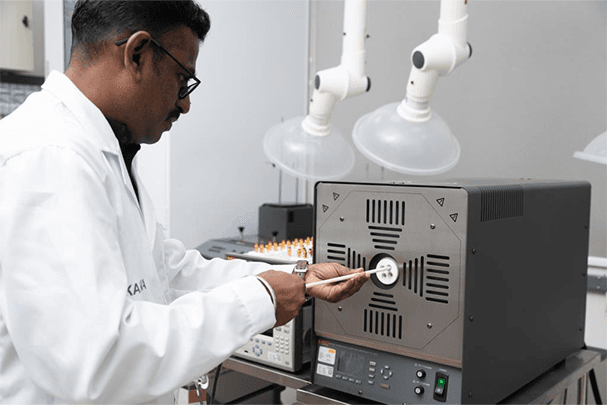
Unitest provides SAC-SINGLAS accredited contact temperature calibration in Singapore over a range of -196°C to 1000°C (for thermocouples, RTDs, thermistors, thermometers, temperature data loggers, dry-blocks, baths and furnaces), with traceable ISO/IEC 17025 certificates, in-lab or on-site.
What is Contact Temperature Calibration?
Contact temperature calibration is a systematic procedure used to verify and adjust the accuracy of temperature measuring instruments that come into direct physical contact with the object or medium being measured. These instruments can include thermocouples, resistance temperature detectors (RTDs), thermistors, and various other temperature sensors. Calibration compares the readings of the instrument to a reference standard of known accuracy, allowing any deviations or inaccuracies to be identified and corrected. Unitest Instruments delivers professional temperature calibration services in Singapore.
Temperature data loggers and multi-channel recorders
A temperature data logger needs calibration like any other sensor, and the stakes are higher than usual because its logged readings end up in batch records, validation files and audit evidence. For the accredited input ranges, common models and interval guidance, see our temperature data logger calibration in Singapore page. If the loggers are being used to qualify a storage area, our temperature mapping service covers the whole space.
When Should You Perform Contact Temperature Calibration?
The frequency of temperature calibration depends on various factors, including the type of instrument, its usage, and environmental conditions. As a general guideline:
New Instruments: New temperature measuring instruments should undergo initial calibration to establish their accuracy.
Regular Calibration: Periodic calibration is recommended, typically annually or based on the instrument’s specifications and industry standards.
Critical Applications: For applications where temperature accuracy is crucial, more frequent calibration may be necessary.
After Significant Events: Calibration should be performed after any significant event, such as mechanical shock, exposure to extreme temperatures, or repairs/modifications.
Conclusion
In conclusion, contact temperature calibration is a vital process for achieving accurate and reliable temperature measurements. Properly calibrated temperature measuring instruments are essential for process control, compliance, data confidence, and successful research and development. By understanding the importance of calibration and following the appropriate calibration procedures, you can ensure that your temperature measurements are of the highest quality. At Unitest Instruments, our experts provide temperature calibration services in Singapore.
In the following sections of this guide, we will delve deeper into the contact temperature calibration process, step-by-step procedures, necessary equipment, and best practices to empower you with the knowledge and skills to perform temperature calibration effectively. Let’s embark on this journey to master the art of contact temperature calibration!
What we calibrate
Temperature instruments we calibrate
- Thermocouples (K/J/T/etc.)
- RTDs / PT100
- Thermistors
- Digital & dial thermometers
- Temperature data loggers & transmitters
- Dry-block & liquid-bath calibrators
- Ovens / furnaces / chambers
Accredited under SAC-SINGLAS LA-2023-0845-C. View our accreditation & scope →
Instrument guides: Thermocouple · RTD / PT100 Temperature Sensor · Thermistor Temperature Sensor · Dry Block / Dry Well Calibrator · Temperature Data Logger · Digital Temperature Indicator · Temperature Signal Transmitter · Platinum Resistance Thermometer · Liquid Temperature Bath · Portable Pocket Thermometer · Thermocouple Wire / Extension Wire · RTD Simulator · Thermocouple Simulator
Questions
Temperature calibration FAQ
Why is Temperature Calibration Important?
Accurate temperature measurements are critical in numerous industries and applications , such as manufacturing, pharmaceuticals, food processing, environmental monitoring, and scientific research. Here’s why contact temperature calibration is of utmost importance: Process Control and Quality Assurance: In industrial settings, precise temperature control is vital for ensuring consistent product quality, process efficiency, and safety. Calibration ensures that the temperature measurements used for process control are reliable and accurate. Compliance and Standards: Many industries must adhere to specific regulations and standards that require regular temperature calibration to maintain certification and compliance. Data Confidence: Calibration instills confidence in the accuracy of temperature measurements, allowing you to make informed decisions based on trustworthy data. Equipment Performance Verification: Calibration helps identify any drift or deviations in the performance of temperature sensors, allowing for timely maintenance and preventing costly breakdowns. Research and Development: In scientific research, precise temperature measurements are essential for accurate experimentation and data analysis. Calibration ensures that research outcomes are valid and replicable.
Why is it necessary to calibrate a thermometer?
Thermometer accuracy can change over time, so you should calibrate your thermometer to ensure accurate readings. Thermometers can drift over time for two reasons. First, mechanical shock can cause the thermometer to drift. Second, thermometers can drift when exposed to extreme temperatures.
What is calibrated with a temperature calibrator?
Common items calibrated with temperature calibrators include thermometers, thermocouples, thermistors, and temperature transmitters.
Range information
contact Temperature calibration – Range from -196°C to 1000°C. Humidity Calibration – 5% to 90% Relative Humidity, Temperature range 5°C to 50°C. Non-contact Temperature calibration – Range from 5°C to 500°C.
Accredited ranges
Temperature calibration ranges & measurement uncertainty
The parameters, ranges and calibration & measurement capability (CMC) below are taken from our SAC-SINGLAS Schedule of Accreditation (LA-2023-0845-C, to ISO/IEC 17025). CMC is the smallest measurement uncertainty we can achieve under accredited conditions.
RTD, PRT Sensor with Indicator & Temperature Measuring instruments (Lab)· UNI-T001 Rev:0
| Range / measured quantity | Measurement uncertainty (CMC) |
|---|---|
| -80 °C – -40 °C | 0.011 °C |
| >-40 °C – 0 °C | 0.01 °C |
| >0 °C – 50 °C | 0.01 °C |
| >50 °C – 140 °C | 0.01 °C |
| >140 °C – 210 °C | 0.01 °C |
| >210 °C – 270 °C | 0.011 °C |
| >270 °C – 450 °C | 0.018 °C |
| >450 °C – 500 °C | 0.02 °C |
| >500 °C – 660 °C | 0.39 °C |
RTD, PRT Sensor with Indicator & Temperature Measuring instruments (Site)· UNI-T001 Rev:0
| Range / measured quantity | Measurement uncertainty (CMC) |
|---|---|
| -95 °C – 0 °C | 0.066 °C |
| >0 °C – 60 °C | 0.033 °C |
| >60 °C – 140 °C | 0.047 °C |
| >140 °C – 270 °C | 0.26 °C |
| >270 °C – 450 °C | 0.33 °C |
| >450 °C – 660 ° | 0.39 °C |
Thermocouple Wire with Indicator (Lab)· UNI-T001 Rev:0
| Range / measured quantity | Measurement uncertainty (CMC) |
|---|---|
| -80 °C - -40 °C | 0.17 °C |
| >-40 °C – 0 °C | 0.17 °C |
| >0 °C – 50 °C | 0.17 °C |
| >50 °C – 140 °C | 0.17 °C |
| >140 °C - -210 °C | 0.17 °C |
| >210 °C – 270 °C | 0.17 °C |
| >270 °C – 450 °C | 0.17 °C |
| >450 °C – 500 °C | 0.17 °C |
| >500 °C – 660 °C | 0.53 °C |
| >660 °C – 800 °C | 0.9 °C |
| >800 °C – 1000 °C | 0.9 °C |
Thermocouple Wire with Indicator (Site)· UNI-T001 Rev:0
| Range / measured quantity | Measurement uncertainty (CMC) |
|---|---|
| -95 °C – 0 °C | 0.29 °C |
| >0 °C – 60 °C | 0.24 °C |
| >60 °C – 140 °C | 0.24 °C |
| >140 °C – 270 °C | 0.31 °C |
| >270 °C – 450 °C | 0.33 °C |
| >450 °C – 660 °C | 0.4 °C |
Temperature Indicator with other Sensors (Lab)· UNI-T001 Rev:0
| Range / measured quantity | Measurement uncertainty (CMC) |
|---|---|
| -80 °C – 0 °C | 0.14 °C |
| >0 °C – 50 °C | 0.12 °C |
| >50 °C – 140 °C | 0.12 °C |
| >140 °C – 210 °C | 0.13 °C |
| >210 °C – 270 °C | 0.13 °C |
| >270 °C – 450 °C | 0.13 °C |
| >450 °C – 500 °C | 0.13 °C |
| >500 °C – 660 °C | 0.53 °C |
Temperature Indicator with other Sensors (Site)· UNI-T001 Rev:0
| Range / measured quantity | Measurement uncertainty (CMC) |
|---|---|
| -95 °C – 0 °C | 0.17 °C |
| >0 °C – 60 °C | 0.13 °C |
| >60 °C – 140 °C | 0.13 °C |
| >140 °C – 270 °C | 0.28 °C |
| >270 °C – 450 °C | 0.35 °C |
| >450 °C – 660 °C | 0.4 °C |
RTD Sensor without Indicator, PRT Sensor without Indicator & Temperature measuring instruments (Lab)· UNI-T003 Rev:0
| Range / measured quantity | Measurement uncertainty (CMC) |
|---|---|
| -80 °C - -40 °C | 0.01 °C |
| >-40 °C – 0°C | 0.01 °C |
| >0 °C – 50 °C | 0.01 °C |
| >50 °C – 140 °C | 0.012 °C |
| >140 °C – 210 °C | 0.012 °C |
| >210 °C – 270 °C | 0.02 °C |
| >270 °C – 500 °C | 0.03 °C |
| >500 °C – 660 °C | 0.39 °C |
RTD Sensor without Indicator, PRT Sensor without Indicator & Temperature measuring instruments (Site)· UNI-T003 Rev:0
| Range / measured quantity | Measurement uncertainty (CMC) |
|---|---|
| -95 °C – 60 °C | 0.6 °C |
| >60 °C – 140 °C | 0.35 °C |
| >140 °C – 270 °C | 0.43 °C |
| >270 °C – 450 °C | 0.47 °C |
| >450 °C – 660 °C | 0.52 °C |
Thermocouple Wire without Indicator (Lab)· UNI-T004 Rev:0
| Range / measured quantity | Measurement uncertainty (CMC) |
|---|---|
| -80 °C - -40 °C | 0.8 °C |
| >-40 °C – 0 °C | 0.8 °C |
| >0 °C – 50 °C | 0.36 °C |
| >50 °C – 140 °C | 0.36 °C |
| >140 °C – 210 °C | 0.36 °C |
| >210 °C – 270 °C | 0.36 °C |
| >270 °C – 450 °C | 0.36 °C |
| >450 °C – 500 °C | 0.36°C |
| >500 °C – 660 °C | 0.5 °C |
| >660 °C – 800 °C | 1.0 °C |
| >800 °C – 1000 °C | 1.1 °C |
Thermocouple Wire without Indicator (Site)· UNI-T004 Rev:0
| Range / measured quantity | Measurement uncertainty (CMC) |
|---|---|
| -95 °C – 60 °C | 0.72 °C |
| >60 °C – 140 °C | 0.71 °C |
| >140 °C – 280 °C | 0.77 °C |
| >280 °C – 450 °C | 0.78 °C |
| >450 °C – 660 °C | 0.8 °C |
Connecting Thermocouple wire (0 °C – 30 °C)· UNI-T004 Rev:0
| Range / measured quantity | Measurement uncertainty (CMC) |
|---|---|
| Type S | 0.0003 mV |
| Type R | 0.0003 mV |
| Type J | 0.001 mV |
| Type K | 0.0008 mV |
| Type N | 0.0005 mV |
| Type T | 0.0008 mV |
| Type E | 0.0012 mV |
C/J Thermocouple Wire (0 °C – 30 °C)· UNI-T004 Rev:0
| Range / measured quantity | Measurement uncertainty (CMC) |
|---|---|
| Type S | 0.0002 mV |
| Type R | 0.0002 mV |
| Type J | 0.0007 mV |
| Type K | 0.0006 mV |
| Type N | 0.0006 mV |
| Type T | 0.0006 mV |
| Type E | 0.0008 mV |
Thermocouple Indicator – Type K (Lab / Site)· UNI-T005 Rev:0
| Range / measured quantity | Measurement uncertainty (CMC) |
|---|---|
| -200 °C - -100 °C | Lab 0.10 °C / Site 0.91 °C |
| >-100 °C - -25 °C | Lab 0.07 °C / Site 0.55 °C |
| >-25 °C – 120 °C | Lab 0.06 °C / Site 0.55 °C |
| >120 °C – 600 °C | Lab 0.06 °C / Site 0.55 °C |
| >600 °C – 1000 °C | Lab 0.06 °C / Site 0.72 °C |
| >1000 °C – 1372 °C | Lab 0.07 °C / Site 0.91 °C |
Thermocouple Indicator – Type N (Lab / Site)· UNI-T005 Rev:0
| Range / measured quantity | Measurement uncertainty (CMC) |
|---|---|
| -200 °C - -100 °C | Lab 0.08 °C / Site 0.68 °C |
| >-100 °C - -25 °C | Lab 0.06 °C / Site 0.82 °C |
| >-25 °C – 120 °C | Lab 0.06 °C / Site 0.82 °C |
| >120 °C – 410 °C | Lab 0.05 °C / Site 0.82 °C |
| >410 °C – 1000 °C | Lab 0.05 °C / Site 0.82 °C |
| >1000 °C – 1300 °C | Lab 0.06 °C / Site 0.91 °C |
Thermocouple Indicator – Type J (Lab / Site)· UNI-T005 Rev:0
| Range / measured quantity | Measurement uncertainty (CMC) |
|---|---|
| -210 °C - -100 °C | Lab 0.13 °C / Site 0.91 °C |
| >-100 °C - -30 °C | Lab 0.08 °C / Site 0.64 °C |
| >-30 °C – 150 °C | Lab 0.07 °C / Site 0.64 °C |
| >150 °C – 760 °C | Lab 0.07 °C / Site 0.64 °C |
| >760 °C – 1000 °C | Lab 0.07 °C / Site 0.81 °C |
| >1000 °C – 1200 °C | Lab 0.07 °C / Site 0.81 °C |
Thermocouple Indicator – Type T (Lab / Site)· UNI-T005 Rev:0
| Range / measured quantity | Measurement uncertainty (CMC) |
|---|---|
| -250 °C – -150 °C | Lab 0.11 °C / Site 2.2 °C |
| >-150 °C – 0 °C | Lab 0.10 °C / Site 0.55 °C |
| >0 °C – 120 °C | Lab 0.09 °C / Site 0.55 °C |
| >120 °C – 400 °C | Lab 0.09 °C / Site 0.55 °C |
Thermocouple Indicator – Type R (Lab / Site)· UNI-T005 Rev:0
| Range / measured quantity | Measurement uncertainty (CMC) |
|---|---|
| 0 °C – 250 °C | Lab 0.20 °C / Site 2.0 °C |
| >250 °C – 400 °C | Lab 0.20 °C / Site 1.5 °C |
| >400 °C – 1000 °C | Lab 0.10 °C / Site 1.5 °C |
| >1000 °C – 1770 °C | Lab 0.13 °C / Site 1.5 °C |
Thermocouple Indicator – Type S (Lab / Site)· UNI-T005 Rev:0
| Range / measured quantity | Measurement uncertainty (CMC) |
|---|---|
| 0 °C – 250 °C | Lab 0.15 °C / Site 2.0 °C |
| >250 °C – 1000 °C | Lab 0.13 °C / Site 1.3 °C |
| >1000 °C – 1400 °C | Lab 0.13 °C / Site 1.3 °C |
| >1400 °C – 1760 °C | Lab 0.13 °C / Site 1.6 °C |
Thermocouple Indicator – Type E (Lab / Site)· UNI-T005 Rev:0
| Range / measured quantity | Measurement uncertainty (CMC) |
|---|---|
| -250 °C - -150 °C | Lab 0.17 °C / Site 1.7 °C |
| >-150 °C - -25 °C | Lab 0.11 °C / Site 0.6 °C |
| >-25 °C – 350 °C | Lab 0.10 °C / Site 0.6 °C |
| >350 °C – 650 °C | Lab 0.10 °C / Site 0.68 °C |
| >650 °C – 1000 °C | Lab 0.10 °C / Site 0.68 °C |
Thermocouple Simulator – Type K (Lab / Site)· UNI-T005 Rev:0
| Range / measured quantity | Measurement uncertainty (CMC) |
|---|---|
| -200 °C - -100 °C | Lab 0.13 °C / Site 0.62 °C |
| >-100 °C - -25 °C | Lab 0.07 °C / Site 0.55 °C |
| >25 °C – 120 °C | Lab 0.05 °C / Site 0.55 °C |
| >120 °C – 600 °C | Lab 0.05 °C / Site 0.55 °C |
| >600 °C – 1000 °C | Lab 0.05 °C / Site 0.55 °C |
| >1000 °C – 1372 °C | Lab 0.06 °C / Site 0.55 °C |
Thermocouple Simulator – Type N (Lab / Site)· UNI-T005 Rev:0
| Range / measured quantity | Measurement uncertainty (CMC) |
|---|---|
| -200 °C - -100 °C | Lab 0.19 °C / Site 0.91 °C |
| >-100 °C - -25 °C | Lab 0.09 °C / Site 0.82 °C |
| >-25 °C – 120 °C | Lab 0.08 °C / Site 0.82 °C |
| >120 °C – 410 °C | Lab 0.06 °C / Site 0.82 °C |
| >410 °C – 1000 °C | Lab 0.05 °C / Site 0.68 °C |
| >1000 °C – 1300 °C | Lab 0.05 °C / Site 0.68 °C |
Thermocouple Simulator – Type J (Lab / Site)· UNI-T005 Rev:0
| Range / measured quantity | Measurement uncertainty (CMC) |
|---|---|
| -210 °C - -100 °C | Lab 0.16 °C / Site 0.63 °C |
| >-100 °C - -30 °C | Lab 0.08 °C / Site 0.57 °C |
| >-30 °C – 150 °C | Lab 0.06 °C / Site 0.57 °C |
| >150 °C – 760 °C | Lab 0.06 °C / Site 0.57 °C |
| >760 °C – 1000 °C | Lab 0.05 °C / Site 0.63 °C |
| >1000 °C – 1200 °C | Lab 0.05 °C / Site 0.63 °C |
Thermocouple Simulator – Type T (Lab / Site)· UNI-T005 Rev:0
| Range / measured quantity | Measurement uncertainty (CMC) |
|---|---|
| -250 °C – -150 °C | Lab 0.14 °C / Site 1.3 °C |
| >-150 °C – 0 °C | Lab 0.10 °C / Site 0.61 °C |
| >0 °C – 120 °C | Lab 0.05 °C / Site 0.61 °C |
| >120 °C – 400 °C | Lab 0.05 °C / Site 0.61 °C |
Thermocouple Simulator – Type R (Lab / Site)· UNI-T005 Rev:0
| Range / measured quantity | Measurement uncertainty (CMC) |
|---|---|
| 0 °C – 250 °C | Lab 0.38 °C / Site 1.6 °C |
| >250 °C – 400 °C | Lab 0.19 °C / Site 1.4 °C |
| >400 °C – 1000 °C | Lab 0.19 °C / Site 1.4 °C |
| >1000 °C – 1770 °C | Lab 0.16 °C / Site 1.4 °C |
Thermocouple Simulator – Type S (Lab / Site)· UNI-T005 Rev:0
| Range / measured quantity | Measurement uncertainty (CMC) |
|---|---|
| 0 °C – 250 °C | Lab 0.38 °C / Site 1.6 °C |
| >250 °C – 1000 °C | Lab 0.18 °C / Site 1.3 °C |
| >1000 °C – 1400 °C | Lab 0.18 °C / Site 1.4 °C |
| >1400 °C – 1760 °C | Lab 0.19 °C / Site 1.3 °C |
Thermocouple Simulator – Type E (Lab / Site)· UNI-T005 Rev:0
| Range / measured quantity | Measurement uncertainty (CMC) |
|---|---|
| -250 °C - -150 °C | Lab 0.25 °C / Site 0.91 °C |
| >-150 °C - -25 °C | Lab 0.07 °C / Site 0.64 °C |
| >-25 °C – 350 °C | Lab 0.04 °C / Site 0.64 °C |
| >350 °C – 650 °C | Lab 0.03 °C / Site 0.57 °C |
| >650 °C – 1000 °C | Lab 0.03 °C / Site 0.57 °C |
RTD and PRT Indicator – TYPE: PT 385 (100Ω) (Lab / Site)· UNI-T005 Rev:0
| Range / measured quantity | Measurement uncertainty (CMC) |
|---|---|
| -200 °C - -80 °C | Lab 0.06 °C / Site 0.1 °C |
| >-80 – 0 °C | Lab 0.06 °C / Site 0.1 °C |
| >0 °C – 100 °C | Lab 0.07 °C / Site 0.1 °C |
| >100 °C – 300 °C | Lab 0.10 °C / Site 0.15 °C |
| >300 °C – 400 °C | Lab 0.11 °C / Site 0.17 °C |
| >400 °C – 630 °C | Lab 0.14 °C / Site 0.22 °C |
| >630 °C – 800 °C | Lab 0.23 °C / Site 0.25°C |
RTD Simulator – TYPE: PT 385 (100Ω) (Lab / Site)· UNI-T006 Rev:0
| Range / measured quantity | Measurement uncertainty (CMC) |
|---|---|
| -200 °C – 80 °C | Lab 0.02 °C / Site 0.15 °C |
| >80 °C – 100 °C | Lab 0.01 °C / Site 0.15 °C |
| >100 °C – 200 °C | Lab 0.01 °C / Site 0.16 °C |
| >200 °C – 400 °C | Lab 0.01 °C / Site 0.27 °C |
| >400 °C – 800 °C | Lab 0.01 °C / Site 0.27 °C |
Dry Block Calibrator (Lab / Site)· UNI-T007 Rev:0
| Range / measured quantity | Measurement uncertainty (CMC) |
|---|---|
| -95 °C – 140 °C | 0.035 °C |
| >140 °C – 450 °C | 0.05 °C |
| >450 °C – 600 °C | 0.052 °C |
Temperature Enclosure (Freezers, Oven & Furnaces) (Lab / Site)· UNI-T010 Rev:0
| Range / measured quantity | Measurement uncertainty (CMC) |
|---|---|
| -80 °C – -40 °C | 0.4 °C |
| -40 °C – 50 °C | 0.4 °C |
| 50 °C – 160 °C | 0.4 °C |
| 160 °C – 200 °C | 1.1 °C |
| 200 °C – 600 °C | 2.6 °C |
| 600 °C – 800 °C | 2.6 °C |
| 800 °C – 1000 °C | 3.7 °C |
Related
Other calibration disciplines
Humidity Calibration
Learn more →Pressure Calibration
Learn more →RTD Probe Calibration
Learn more →PRT Probe Calibration
Learn more →Thermistor Calibration
Learn more →Guides & resources
Temperature calibration guides
Aerospace Calibration in Singapore: What Gets Calibrated and Why Traceability Matters
Aerospace and MRO calibration in Singapore: which instruments typically need calibrating, why traceable calibration matters for airworthiness and audit trails, and Unitest's relevant services.
Read guide →Semiconductor and Cleanroom Instrument Calibration in Singapore
Calibration for semiconductor fabs and cleanroom facilities in Singapore: which instrument types need it, why cleanroom-grade discipline matters, and how it connects to mapping.
Read guide →Cold-Chain and Reefer Transport Temperature Mapping in Singapore
Cold-chain and reefer transport temperature mapping in Singapore: how transport qualification differs from warehouse mapping, and what 3PLs need for HSA GDP compliance.
Read guide →IQ, OQ, PQ and Temperature Mapping: How a Mapping Study Feeds Equipment Qualification
How temperature mapping data feeds IQ, OQ and PQ equipment qualification documentation for Singapore pharma and GMP facilities, and where a mapping study fits in each stage.
Read guide →