
Calibration Resources
Thermistor Calibration Explained: NTC vs PTC and Why Traceability Matters
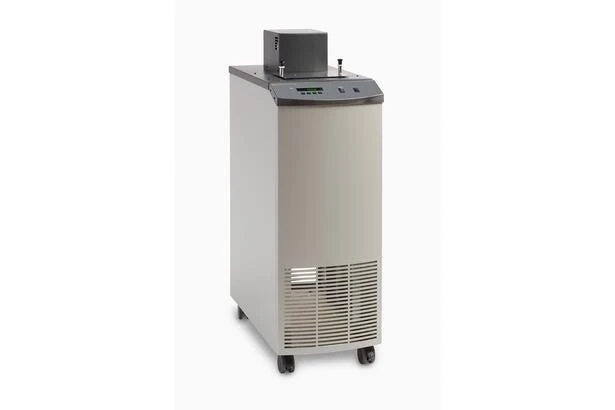
A thermistor is calibrated by comparing its reading against a calibrated reference thermometer at several temperatures across its working band, in a stable liquid bath, and fitting its steep resistance-to-temperature characteristic; at Unitest this is a traceable calibration by comparison, genuinely traceable to national standards through the references used, but honestly not a SAC-SINGLAS accredited calibration, because thermistor calibration is not on our accredited schedule. That distinction is the whole point of this article. A thermistor's value in a medical device, a laboratory instrument or a cold-chain monitor comes from its extreme sensitivity, and that sensitivity is worthless if the sensor has drifted and nothing traceable proves otherwise. Here is how thermistors work, how NTC and PTC types differ, how the calibration is done, and why traceability without accreditation is still a solid, defensible position.
What a thermistor is, and why it is so sensitive
A thermistor is a temperature-sensitive resistor made from a semiconductor material whose resistance changes sharply with temperature. Where a platinum RTD changes resistance gently and almost linearly, a thermistor changes steeply and non-linearly. That steepness is its superpower: over a narrow band, a thermistor can resolve very small temperature changes, which is exactly what a 2 to 8 degrees Celsius vaccine fridge or a patient-temperature monitor needs. The price of that sensitivity is a narrow useful range and a strongly curved characteristic that has to be modelled, not simply read off a straight line.
NTC versus PTC: the two behaviours
Thermistors come in two families defined by which way their resistance moves with temperature.
- NTC (negative temperature coefficient): resistance falls as temperature rises. NTC thermistors are by far the most common in precision temperature measurement, prized for high sensitivity over a narrow band. They dominate medical, laboratory and cold-chain monitoring where small deviations must be caught.
- PTC (positive temperature coefficient): resistance rises as temperature rises, often very abruptly above a threshold. PTC devices are used more for protection and switching (over-temperature cut-outs, resettable fuses, inrush limiting) than for fine measurement, though they appear in some sensing roles.
For measurement, NTC is the type most often submitted for calibration, but both are characterised the same way: by comparison against a traceable reference across the band where they are actually used. The direction of the curve differs; the calibration discipline does not.
How thermistor calibration is actually done
Because a thermistor's response is steep and non-linear, its calibration focuses on characterising that curve accurately across its real working band. The comparison method runs as follows:
- Select calibration points that bracket and populate the thermistor's actual working range, for example points through the cold-chain or physiological band where it operates, since extrapolating a steep curve beyond the calibrated points is unreliable.
- Immerse the thermistor and a calibrated reference thermometer together in a stable, uniform stirred liquid bath, at matched immersion depth.
- Allow both to reach equilibrium at each set point, then record the reference temperature and the thermistor's measured resistance or indicated value.
- Repeat across the chosen points and fit the resistance-to-temperature relationship, so the thermistor's reading can be corrected accurately across its band.
Unitest performs this work in stable baths through our liquid bath calibration capability, and the dedicated thermistor calibration service covers the full method. The narrow, curved characteristic is why point selection matters so much: a thermistor calibrated only at the edges of its band, or beyond where it is used, gives a poor fit exactly where you need accuracy.
The honest accreditation position, stated plainly
This is the part every Singapore quality manager should read carefully, because it protects you in an audit. Unitest holds SAC-SINGLAS accreditation, number LA-2023-0845-C, and that accreditation covers contact RTD and PRT calibration (UNI-T001) and non-contact infrared and radiation thermometer calibration (UNI-T008), among other disciplines. Thermistor calibration is not on that accredited schedule. What we provide for thermistors is a traceable calibration by comparison: the calibration is genuinely traceable to national standards because it is performed against calibrated reference thermometers whose own calibration sits within the accredited chain, but the thermistor calibration itself is not an accredited activity, and we will never call it one.
Why say this so bluntly? Because an experienced pharmaceutical or medical-device auditor can tell the difference in seconds, and a provider who blurs it, stamping "accredited" on work that is not on their schedule, hands you a claim that falls apart under questioning. Accurate wording is the stronger position. A traceable calibration by comparison, honestly described, is a legitimate and widely accepted way to establish that a thermistor reads correctly, as long as it is not dressed up as something it is not. We hold the same line as the wider sensor guide: real about what is accredited, real about what is traceable-by-comparison.
Why traceability still gives you what you need
Traceability is the unbroken chain of comparisons that links your thermistor's reading back to national and international standards, each link carrying a stated uncertainty. For a thermistor, that chain runs through the calibrated reference thermometer used in the bath, which is itself traceable through the accredited temperature scale to ITS-90 fixed points such as the triple point of water. That chain is what gives the calibration its authority. It is the mechanism that lets you say, and prove, that your thermistor's reading is tied to the same reference points the whole national measurement system rests on. Accreditation adds a layer of third-party assessment of the laboratory's competence, but the underlying traceability, done properly and documented, is what makes the result meaningful. For a thermistor, you get a traceable, documented calibration you can put in front of an auditor with an honest description attached.
Where thermistor calibration matters most in Singapore
Thermistors earn their keep wherever small temperature deviations carry large consequences, and Singapore has plenty of those settings:
- Pharmaceutical and biologics cold chain: 2 to 8 degrees Celsius fridges and controlled monitors where a couple of degrees can compromise product.
- Medical devices and diagnostics: patient monitors, analysers and reagent storage where a thermistor's accuracy feeds a clinical decision or a validated assay.
- Laboratory instruments: incubators, analysers and controlled apparatus that use thermistors for tight internal temperature control.
- Electronics and semiconductor process monitoring: narrow-band temperature sensing on equipment and in environmental controls.
In every one of these, the auditor's question is the same: show me the calibration, its traceability and its uncertainty. A thermistor with a current, traceable calibration by comparison answers that question honestly, which is exactly what a quality system needs.
What can go wrong in a thermistor calibration
Because a thermistor's characteristic is so steep, a few specific pitfalls do more damage than they would with an RTD, and a careful calibration is designed to avoid them:
- Calibrating outside the working band. A thermistor is accurate only across a narrow range, and its curve is unforgiving beyond the points measured. Calibration points must populate the band where the sensor is actually used, not a convenient default, or the fitted characteristic will be poor exactly where accuracy is needed.
- Too few points on a curved response. A straight-line sensor can be characterised with a couple of points; a steeply non-linear thermistor needs enough points to capture the curvature, or the correction between points drifts away from the truth.
- Self-heating. The small current used to read a thermistor's resistance warms the sensor slightly. A good calibration keeps that measuring current low and consistent so self-heating does not distort the result.
- Poor immersion or unstable bath. As with any contact sensor, insufficient immersion or a bath that has not stabilised introduces error that has nothing to do with the thermistor itself.
None of these is exotic. They are the everyday details that separate a meaningful thermistor calibration from a number on a page, and they are why the comparison work belongs in a controlled bath with a properly characterised reference.
Thermistor or RTD: choosing for the application
It is worth being clear about when a thermistor is the right sensor at all, because the calibration story follows from the choice. A thermistor suits a narrow band where you need to resolve very small changes cheaply and quickly, such as a fridge holding 2 to 8 degrees Celsius or a medical monitor around body temperature. An RTD or PRT suits a wider range and offers accredited calibration with lower uncertainty, which matters when the reading feeds a validated process or when an auditor expects an accredited certificate. Neither is simply better; they answer different needs. If your application would be better served by an accredited sensor, our temperature sensor types guide compares the options, and the accredited RTD and PRT routes are there when you need them.
How often to recalibrate a thermistor
Thermistors used in critical temperature monitoring are commonly calibrated every 12 months, tightened where the application is more critical or the sensor lives a harder life. Because thermistor characteristics can shift with temperature history and material ageing, a sensor that has been cycled hard, stored at extremes, or subjected to shock deserves a shorter interval or a check calibration. As with any sensor, the honest way to set the interval is from criticality, conditions of use and the sensor's own calibration history, a subject we cover in full in how often to calibrate temperature sensors.
Get your thermistors calibrated and honestly documented
If your medical, pharmaceutical, laboratory or cold-chain thermistors need calibration, we will do the work as a traceable calibration by comparison and describe it exactly as it is, so your audit file is clean and defensible. Send us your thermistor list and the temperature ranges you use them at, and we will confirm the method, the traceability and a clear quote, with no obligation. Reach us through the contact page.
Frequently asked questions
Is thermistor calibration SAC-SINGLAS accredited at Unitest?
No. Thermistor calibration at Unitest is a traceable calibration by comparison, not an accredited calibration. It is genuinely traceable to national standards because it is performed against calibrated reference thermometers within the accredited chain, but thermistor calibration is not on our SAC-SINGLAS accredited schedule, so we never describe it as accredited. Our accredited temperature sensor scopes are contact RTD and PRT (UNI-T001) and non-contact infrared and radiation (UNI-T008).
What is the difference between NTC and PTC thermistors?
An NTC (negative temperature coefficient) thermistor decreases in resistance as temperature rises and is the most common type in precision temperature measurement, valued for high sensitivity over a narrow band. A PTC (positive temperature coefficient) thermistor increases in resistance as temperature rises, often abruptly, and is used more for over-temperature protection and switching than for fine measurement. Both are calibrated by comparison against a traceable reference.
How is a thermistor calibrated?
A thermistor is calibrated by comparison: it is immersed alongside a calibrated reference thermometer in a stable, uniform liquid bath, allowed to reach equilibrium at several points across its working band, and its measured resistance or indicated value is recorded against the reference at each point. The resistance-to-temperature characteristic is then fitted so the reading can be corrected accurately across the band where the thermistor is actually used.
Does a traceable calibration by comparison hold up in an audit?
Yes, provided it is described honestly. Traceability is the unbroken chain of comparisons linking the thermistor's reading back to national standards through the calibrated reference used, each with a stated uncertainty. That documented traceability is what makes the result meaningful to an auditor. Accreditation adds third-party assessment of the laboratory's competence, but a properly performed and documented traceable calibration by comparison is a legitimate, widely accepted result as long as it is not misrepresented as accredited.
How often should a thermistor be calibrated?
Thermistors used in critical temperature monitoring are commonly calibrated every 12 months, and more often where the application is highly critical or the sensor is used in harsh conditions. Because thermistor characteristics can shift with temperature history and material ageing, a sensor that has been cycled hard, stored at extremes or subjected to shock should be recalibrated or checked sooner. Set the interval from criticality, conditions of use and calibration history.
Where is thermistor calibration most important in Singapore?
It matters most where small temperature deviations carry large consequences: pharmaceutical and biologics cold chain at 2 to 8 degrees Celsius, medical devices and diagnostics where a reading feeds a clinical decision, laboratory instruments needing tight internal control, and electronics or semiconductor process monitoring. In each case an auditor will ask for the calibration, its traceability and its uncertainty, which a current traceable calibration by comparison answers honestly.
Related services